The Decipher & Atlas Listening Infrastructure Report
Truthsayers List 2025
DECIPHER & ATLAS REPORT
Report date: September 28, 2026 — International Day for Universal Access to Information
Companion system: Decipher & Atlas Public Trust Truthsayers Archive
Core question: Who helped make reality more legible under pressure in 2025?
Opening Statement
This is not a list of people to admire from a distance.
It is a listening infrastructure report: a map of twenty people and collectives whose work helped make reality more legible under pressure in 2025.
In the Age of Interconnection, truth is not disappearing.
It is becoming harder to verify, harder to stabilize, and harder to hold in common.
Public systems now move through overlapping crises:
- war
- displacement
- ecological stress
- democratic breakdown
- gendered violence
- information distortion
- institutional failure
- sentient harm
- weakening shared reality
That is why Decipher & Atlas uses the term Truthsayer.
A Truthsayer is not simply a person who is correct.
A Truthsayer is not a celebrity, partisan messenger, guru, or person who agrees with Decipher & Atlas.
A Truthsayer is a thinker, witness, scientist, writer, journalist, investigator, artist, defender, public voice, or collective whose work helps make reality more legible under pressure.
The purpose of this report is not admiration alone.
The purpose is public orientation.
The Truthsayers List identifies people and collectives whose work helps the public know:
- who to listen to
- whose records to examine
- whose warnings to take seriously
- whose evidence to inspect
- whose work remains useful beyond a single news cycle
This is not a list of perfect people.
It is not a certificate of total agreement.
It is not a ranking of the “best” people in the world.
It is a listening map.
The 2025 Selection Structure
The 2025 list contains five selections under each Decipher & Atlas function:
- MM — Mapping Meaning
- VT — Verifying Truth
- DI — Dynamic Interconnections
- EF — Embodying a Future
Names are sequenced for explanatory meaning rather than alphabetically or as a best-to-worst ranking.
MM — Mapping Meaning
Mapping Meaning recognizes people who helped interpret reality when meaning became unstable.
1. Sana Atef — Afghanistan ↗
Authoritative reference: Zan Times author page
Sana Atef is an Afghan journalist working under a pseudonym with Zan Times.
Her reporting documents women’s lives under Taliban rule, including harassment, forced marriage, child abuse, and the realities of women-headed households.
She is recognized because her work maps what authoritarian control means in daily life and preserves testimony that systems of repression attempt to erase.
Her work does not only report policy.
It makes the lived consequences of authoritarian rule visible.
Truth under authoritarianism often survives first as testimony.
Before systems change, someone has to describe what is happening clearly enough that denial becomes harder.
2. Yousra Elbagir — Sudan / United Kingdom ↗
Authoritative reference: Sky News profile
Yousra Elbagir is a Sudanese British journalist whose reporting has helped bring Sudan’s war, civil unrest, displacement, and human suffering into wider public view.
She is recognized because she restores meaning and sustained attention to a crisis frequently pushed outside the dominant global news frame.
Her work helps readers understand Sudan not as background tragedy, but as a living political and human reality.
In a year of war, mass displacement, atrocity reports, and humanitarian collapse, her reporting helped keep Sudan legible beyond the region itself.
3. Maritza L. Félix — United States / Mexico Borderlands ↗
Authoritative reference: PEN America profile
Maritza L. Félix is the founder of Conecta Arizona, a Spanish-language news service connecting communities across the United States-Mexico border.
Her work brings immigration, border policy, civic life, community information, and cross-border experience into a more coherent public frame.
She is recognized because border reality is often fragmented into slogans, fear, and competing national narratives.
Her work rebuilds context across that fracture.
People living across borders need more than headlines.
They need trusted civic information, cultural fluency, and a way to understand policies that shape daily life.
4. Juliana Dal Piva — Brazil ↗
Authoritative reference: IWMF profile
Juliana Dal Piva is a Brazilian investigative journalist known for reporting on corruption, political power, and human rights abuses.
Her work examines systems that depend on confusion, intimidation, and public fatigue.
She is recognized because she helps readers understand the structures behind scandal rather than treating wrongdoing as a series of isolated events.
Corruption is not only a legal category.
It is also a meaning problem.
When corruption becomes normalized, people stop seeing how public life is being rearranged around private power.
5. Frenchie Mae Cumpio — Philippines ↗
Authoritative reference: Committee to Protect Journalists record
Frenchie Mae Cumpio is a Filipino journalist known for reporting on inequality, land rights, militarized conflict, disaster response, and vulnerable communities in the Eastern Visayas.
She has been detained in connection with her work.
She is recognized because her reporting connects local injustice to larger systems of power.
Her work makes visible the people and communities most likely to be disappeared from the official story.
Her case also demonstrates how truth work can be attacked through legal systems, security narratives, and the criminalization of reporting.
VT — Verifying Truth
Verifying Truth recognizes people and collectives who tested claims, preserved evidence, documented events, and made denial harder.
6. Anas al-Sharif — Palestine — Posthumous ↗
Authoritative reference: Front Line Defenders profile
Anas al-Sharif was an Al Jazeera journalist killed in Gaza in 2025.
Before his death, press-freedom organizations had warned about efforts to smear and discredit him while he continued reporting from inside the conflict.
He is recognized because his reporting and the attempts to discredit him became part of the year’s central truth-pressure condition:
the killing, discrediting, and erasure of local journalists while the world depended on them for the record.
His inclusion is posthumous because his work did not end with his death.
It remains part of the public record.
So does the effort to silence it.
7. Mariam Dagga / Mariam Abu Daqqa — Palestine — Posthumous ↗
Authoritative reference: Associated Press profile and work
Mariam Dagga, also reported as Mariam Abu Daqqa, was a visual journalist who worked with the Associated Press and other news organizations.
She was killed in the Nasser Hospital strikes in Gaza in 2025.
She is recognized because visual journalism preserves public evidence when words, access, and official narratives remain disputed.
Her work helped document civilians, hospitals, and humanitarian collapse in a conflict environment where foreign press access was severely restricted.
Her death marks more than individual loss.
It marks the danger faced by local journalists whose images become part of the world’s evidence.
8. Hussam al-Masri — Palestine — Posthumous ↗
Authoritative reference: Reuters profile
Hussam al-Masri was a Reuters cameraman killed in the Nasser Hospital strikes in Gaza.
He was helping maintain a live visual record from one of the few places where journalists could continue documenting events.
He is recognized because live documentation is a form of public evidence.
His work helped keep the record open where access, visibility, and accountability were all under pressure.
His inclusion recognizes the people behind the camera, the live feed, the frame, and the public record.
9. Taj al-Sir Ahmed Suleiman — Sudan — Posthumous ↗
Authoritative reference: Committee to Protect Journalists record
Taj al-Sir Ahmed Suleiman was director of the Sudan News Agency office in El-Fasher.
He was reportedly killed after the Rapid Support Forces advanced into the city.
He is recognized because local journalists and institutional record-keepers become direct targets when armed groups seek control over what can be publicly known.
His death belongs in this report not only as a statistic, but as evidence of what happens when the public record itself becomes dangerous.
His inclusion also broadens the posthumous record beyond Gaza.
Sudan has been one of the world’s most devastating and under-covered conflicts.
10. Justice for Myanmar — Myanmar — Collective Recognition ↗
Authoritative reference: Official website
Justice for Myanmar is an investigative collective documenting international corporate and financial support connected to Myanmar’s military.
Its members work anonymously because public identification would increase the danger they face.
This is a collective recognition.
Anonymity in this case is part of the truth infrastructure.
Justice for Myanmar is recognized because its work follows money, power, corporate relationships, and complicity through systems designed to remain opaque.
Verification is not only about correcting false claims.
It is also about revealing the hidden machinery that keeps violent systems supplied.
DI — Dynamic Interconnections
Dynamic Interconnections recognizes people whose work revealed how systems connect across domains.
11. Julian Aguon — Guam / Pacific Islands ↗
Authoritative reference: Blue Ocean Law profile
Julian Aguon is a Chamorro human-rights lawyer whose work with Pacific Islands Students Fighting Climate Change helped bring climate justice before the International Court of Justice.
His advocacy connects:
- Indigenous rights
- island survival
- international law
- climate harm
- territorial integrity
- future generations
He is recognized because his work shows that climate change is not only an environmental issue.
It is simultaneously legal, cultural, territorial, ecological, intergenerational, and moral.
Island nations and Indigenous communities are often treated as symbols of climate vulnerability rather than as authors of legal and political truth.
His work helps reverse that frame.
12. Audrey Tang — Taiwan ↗
Authoritative reference: Right Livelihood profile
Audrey Tang is a civic technologist, former digital minister of Taiwan, and democratic innovation figure.
Her work has explored how technology can deepen public trust, widen participation, and resist polarization rather than accelerate it.
She is recognized because her work connects:
- technology
- democracy
- civic participation
- public trust
- information integrity
- institutional design
Her work helps make visible the difference between technology as control and technology as civic infrastructure.
In a year of artificial-intelligence acceleration, platform mistrust, and disinformation risk, that distinction matters.
13. Francesca Albanese — United Nations / Italy — Contested Inclusion ↗
Authoritative reference: United Nations profile
Francesca Albanese is the United Nations Special Rapporteur on the occupied Palestinian territories.
Her work has been sharply contested, criticized, sanctioned, defended, and debated, particularly in relation to:
- Gaza
- occupation
- international law
- corporate accountability
- state power
- the International Criminal Court
- institutional response
She is recognized as a contested inclusion because her work connects war, law, occupation, corporations, state power, and accountability.
This report marks her inclusion as contested.
Inclusion does not indicate universal agreement with every statement, method, or interpretation associated with her work.
A Truthsayer does not require universal agreement.
The question is whether the work makes hidden structures more visible under pressure.
14. Mari Luz Canaquiri Murayari — Peru ↗
Authoritative reference: Goldman Environmental Prize profile
Mari Luz Canaquiri Murayari is an Indigenous Kukama leader whose work helped secure legal recognition for the Marañón River.
Her advocacy connects:
- Indigenous knowledge
- river systems
- legal personhood
- environmental protection
- culture
- health
- future generations
She is recognized because her work makes visible a truth dominant systems often deny:
rivers are not only resources.
They are living systems, cultural beings, legal questions, and conditions of survival.
Her work changes the listening frame.
The river is not only a subject of policy.
It is a presence with claims.
15. Semia Gharbi — Tunisia ↗
Authoritative reference: Goldman Environmental Prize profile
Semia Gharbi is a Tunisian environmental defender whose work exposed illegal waste trafficking between Italy and Tunisia.
Her campaign connected:
- environmental harm
- international trade
- public health
- corruption
- political accountability
- unequal burden transfer
She is recognized because her work revealed how pollution moves through systems of power.
Waste dumping is not only an environmental event.
It is a governance failure, trade relationship, justice issue, and transfer of harm.
Her work makes visible a pattern often hidden by distance:
wealthy systems can export harm while poorer communities are left to absorb the damage.
EF — Embodying a Future
Embodying a Future recognizes people and collectives who carried, protected, or built future-facing responses under pressure.
16. Emergency Response Rooms — Sudan — Collective Recognition ↗
Authoritative reference: Right Livelihood profile
Sudan’s Emergency Response Rooms are grassroots civilian networks providing:
- food
- medicine
- evacuation assistance
- mutual aid
- local survival infrastructure
They are recognized because they do not only describe collapse.
They embody civic survival inside it.
Their inclusion matters because the future is not always built by formal institutions.
Sometimes it is held together by civilian networks operating under extraordinary pressure, keeping people alive when state systems fail or armed actors destroy ordinary civic life.
17. Edmundo González Urrutia — Venezuela ↗
Authoritative references: Inter-American Dialogue profile; Carter Center final election report ↗
Edmundo González Urrutia became a central figure in Venezuela’s disputed democratic transition after María Corina Machado was blocked from running.
He became the opposition’s alternative candidate while citizens and opposition networks worked to document and defend the election record.
He is recognized because election truth is not abstract.
It is the bridge between public will and public reality.
His role represents the future-facing demand that votes remain visible when power attempts to overwrite them.
The Carter Center’s final election-observation report found that the 2024 election did not meet international standards for electoral integrity. It also found that polling-station results forms collected and published by the opposition demonstrated a clear and convincing victory for González, while the electoral authority did not publish polling-station-level results that would allow its announced outcome to be independently verified.
18. Luc Agblakou — Benin ↗
Authoritative reference: Front Line Defenders profile
Luc Agblakou is a human-rights educator and defender working for the dignity, safety, health inclusion, and legal protection of LGBTIQ+ people in Benin.
He founded Hirondelle Club International.
He is recognized because his work expands who is permitted to belong to the future.
A future that excludes vulnerable people is not a future.
It is a continuation of harm under another name.
19. Arnon Nampa — Thailand ↗
Authoritative reference: Front Line Defenders profile
Arnon Nampa is a Thai human-rights lawyer and democracy advocate associated with Thai Lawyers for Human Rights.
His work has challenged restrictions on:
- speech
- democracy
- civic participation
- legal protection
He is recognized because public courage requires legal defence.
When speech becomes dangerous, the future depends not only on those who speak, but also on those who defend the right to speak.
20. Batmunkh Luvsandash — Mongolia ↗
Authoritative reference: Goldman Environmental Prize profile
Batmunkh Luvsandash is a Mongolian environmental defender recognized for protecting East Gobi desert lands from mining pressure.
He is recognized because land protection is future protection.
His work shows that ecosystems treated as empty by extraction systems may in fact hold:
- life
- memory
- culture
- ecological relationships
- human survival
His inclusion recognizes a future built not only through technology, growth, or innovation, but also through restraint, protection, and refusal to sacrifice living systems for short-term extraction.
Considered but Not Selected
María Corina Machado — Venezuela ↗
References: official 2025 Nobel Peace Prize record ↗; Associated Press report on the January 2026 medal presentation ↗
María Corina Machado was considered because she received the 2025 Nobel Peace Prize and because of her role in Venezuela’s democratic struggle.
She was not selected for the final Decipher & Atlas Truthsayers List because her January 2026 presentation of the Nobel Peace Prize medal to Donald Trump created a listening-infrastructure conflict inconsistent with the report’s purpose.
This does not erase her role in Venezuela’s democratic struggle.
It does mean that she is not presented here as a clean listening signal.
This case demonstrates that external awards may support consideration but do not replace D&A’s independent assessment.
The purpose of this report is not to reward visibility.
It is to strengthen public orientation.
Lifetime Truthsayer Recognition — 2025
Jane Goodall ↗
Authoritative reference: Jane Goodall Institute profile
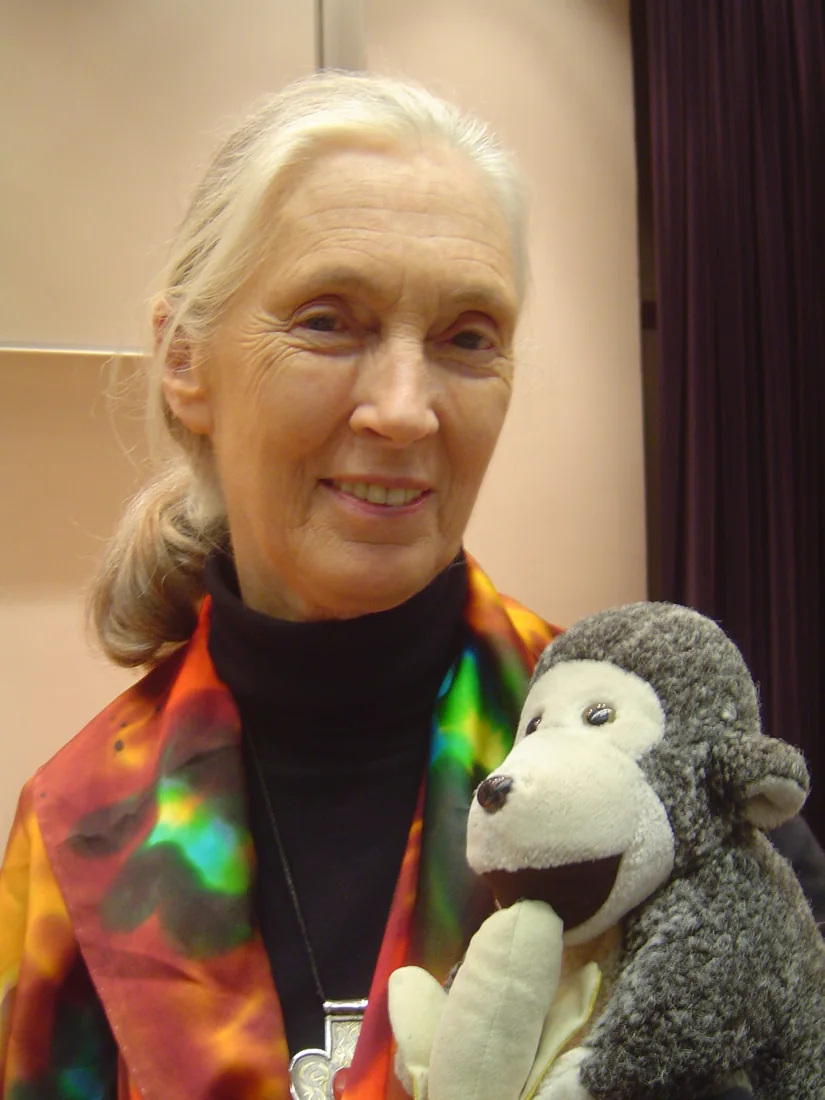
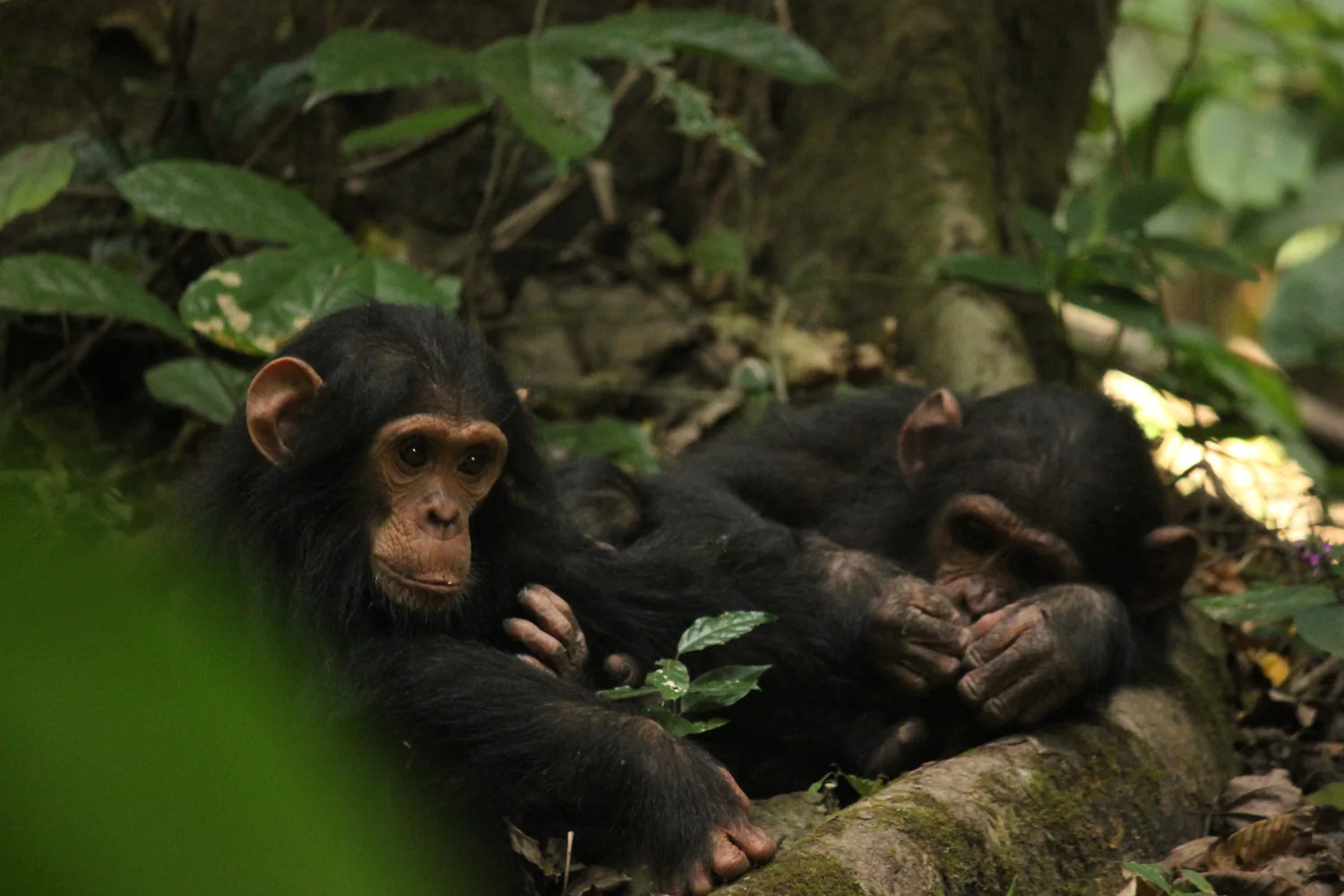
Jane Goodall is the first Decipher & Atlas Lifetime Truthsayer.
This recognition is separate from the Annual Top 20.
The annual list recognizes people and collectives who did something with distinction during the year under review.
The Lifetime Truthsayer Recognition identifies a long signal:
a body of work that carried truth across time.
Goodall’s work changed how humans understand other animals and, through that change, how humans understand themselves.
Beginning with her field research at Gombe, she helped overturn assumptions about human uniqueness.
Her observations of chimpanzees:
- using tools
- hunting
- forming social bonds
- showing emotion
- living within complex social systems
changed science, conservation, public imagination, and moral attention.
Her work did not only add facts.
It changed the frame.
Goodall made it harder to treat nonhuman life as background.
She expanded the public field of concern to include:
- intelligence
- kinship
- culture
- suffering
- individuality
- responsibility beyond the human line
Her lifetime signal reaches across the full Decipher & Atlas framework.
MM — Mapping Meaning
She helped the public understand that the boundary between human and nonhuman life was not as simple as dominant culture had assumed.
VT — Verifying Truth
She built that understanding through observation, field record, and long-term study.
DI — Dynamic Interconnections
She connected animal behaviour, habitat, conservation, community life, youth education, climate, and human responsibility.
EF — Embodying a Future
She spent decades demonstrating that hope is not passive optimism.
It is disciplined action in defence of the living world.
Jane Goodall died on October 1, 2025, at age 91, while in California on a speaking tour.
Her death makes the 2025 recognition posthumous.
Her work remains active in the public-trust field because it continues to shape how people listen to animals, ecosystems, science, and the future.
The first Decipher & Atlas Lifetime Truthsayer is therefore Jane Goodall:
a long-signal voice whose work made the living world more legible and made human responsibility harder to deny.
Posthumous Press Record — 2025
This report includes posthumous recognition because some Truthsayers are killed, disappeared, imprisoned, or silenced in connection with work that makes reality visible.
The posthumous record is not a footnote.
It is part of the condition being measured.
The Committee to Protect Journalists’ 2025 annual report ↗ recorded 129 journalists and media workers killed worldwide in 2025 — the highest annual total in CPJ’s records at the time of publication. CPJ’s continuously updated killed-journalists database ↗ now lists 132 confirmed or suspected work-related deaths for 2025 and notes that cases may be reclassified as investigations continue.
Reporters Without Borders’ 2025 round-up ↗ recorded 67 journalists killed between December 1, 2024, and December 1, 2025. That figure should not be read as a contradiction of CPJ’s: RSF uses its own inclusion methodology and a different reporting window, while CPJ reports a calendar-year total and continues to update its case assessments.
UNESCO’s Observatory of Killed Journalists ↗ provides a continuing public record of journalist killings and the judicial status of cases under UNESCO’s own verification criteria.
Readers can inspect the underlying records directly:
- Committee to Protect Journalists — 2025 annual report ↗
- Committee to Protect Journalists — 2025 killed-journalists database ↗
- Reporters Without Borders — 2025 round-up ↗
- UNESCO — Observatory of Killed Journalists ↗
The D&A finding is that the 2025 posthumous press record directly shaped this year’s list.
The following people were selected from the wider posthumous record:
- Anas al-Sharif
- Mariam Dagga / Mariam Abu Daqqa
- Hussam al-Masri
- Taj al-Sir Ahmed Suleiman
They are included because their deaths are inseparable from a central truth-pressure condition of the year:
the killing, discrediting, and erasure of people documenting reality from inside conflict zones.
The report cannot name every journalist or media worker killed in 2025.
But it can refuse to let the dead disappear into a number.
Recognition and Evidence Systems
The selections in this report draw on credible external recognition and monitoring systems as evidence anchors, including:
- International Women’s Media Foundation ↗
- Committee to Protect Journalists ↗
- Reporters Without Borders ↗
- UNESCO Observatory of Killed Journalists ↗
- Right Livelihood Laureates Archive ↗
- Goldman Environmental Prize winners ↗
- Front Line Defenders ↗
The report also uses established legal and institutional records, primary work and testimony, credible international journalism, and scientific and academic records. These are evidence categories rather than single authorities; the relevant sources are linked directly in each selection or claim so readers can inspect the specific record on which the assessment relies.
These organizations do not determine D&A selections.
They strengthen verification.
A monetary award, institutional prize, public title, or international recognition does not automatically qualify someone as a Truthsayer.
D&A evaluates final selections through:
- the D&A Truthsayer definition
- the D&A verification workflow
- the D&A critique and challenge framework
- credibility-conflict review
- global-balance review
- final editorial judgment
Closing Statement
The 2025 Truthsayers List is a listening map for a distorted world.
It names people and collectives whose work helped clarify meaning, verify truth, reveal interconnection, or embody a more survivable future.
Some are journalists.
Some are lawyers.
Some are environmental defenders.
Some are public thinkers.
Some are anonymous.
Some are collectives.
Some are dead.
Together, they form part of the listening infrastructure the public now needs.
Not because any one person has the whole truth.
Because without people like this, the truth becomes easier to bury.